I · The place
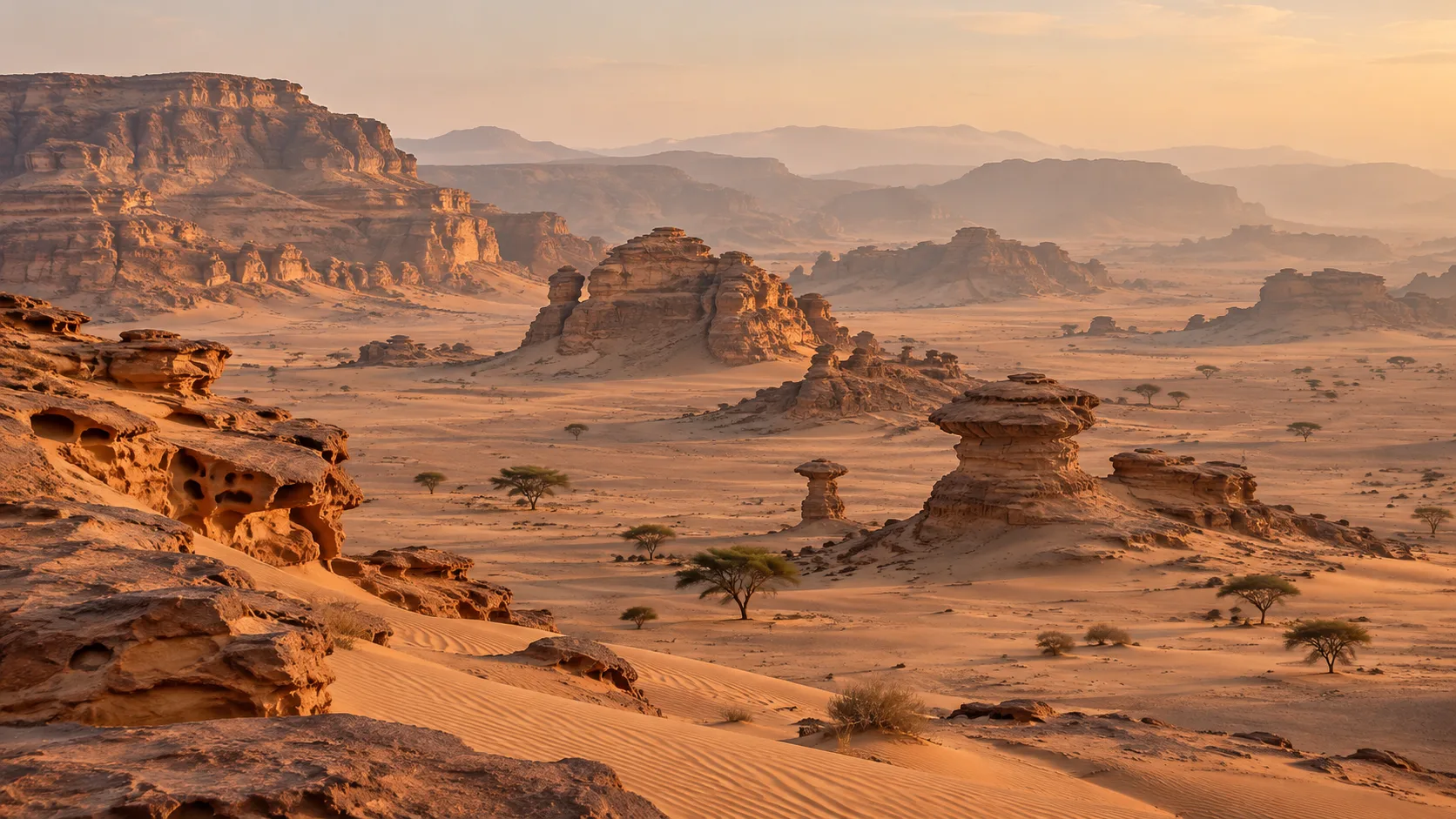
A private canyon reserve in the north-west of the Kingdom, a few villas of earth and stone, and one hour we live for.
The hour after sunset.
Forty square kilometres of canyon, and one long evening.
i The name
An old word for a short light.
Ghasaq is the Arabic word for the first darkness of the night, the short distance between the sun going down and the dark becoming complete. In a city it passes without anyone noticing. Here, between sandstone walls dozens of metres high, it stretches into an event: the rock reddens, then turns rose, then blue, and then the first star appears.
The idea began with a simple question from a family that has held land in the valley for generations: how do you welcome guests without changing what makes the place worth visiting? The answer was to build little, slowly, and with what the land itself provides.
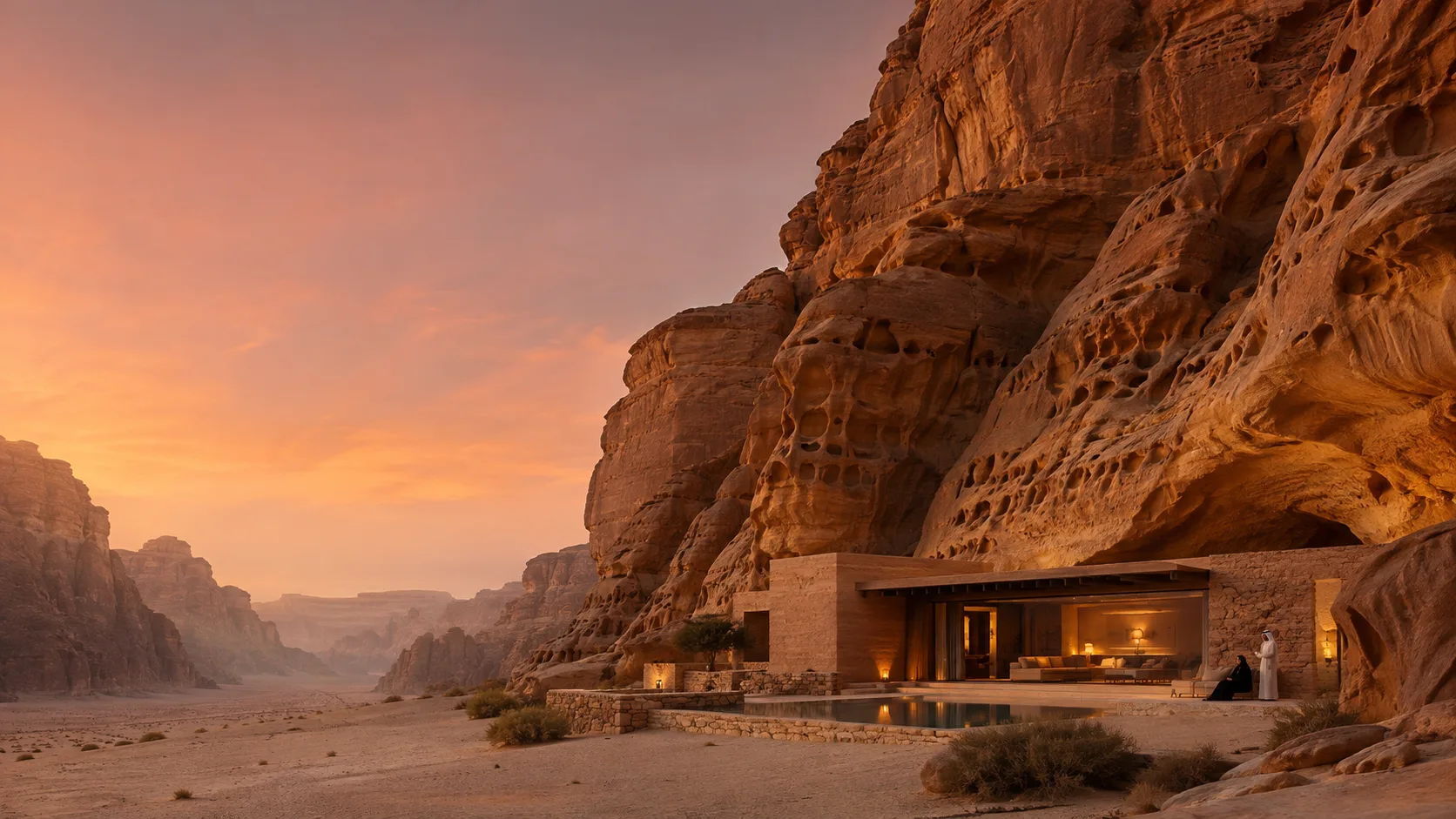
So you will not find a lobby here, or air-conditioned corridors, or signs. You will find seven houses spread apart, a sand track between them, and people who know the valley the way they know their own homes.
ii The land
Stone cut by wind before anyone kept count.
The sandstone in these valleys was laid down hundreds of millions of years ago, then wind and the rare flood carved it into towers, arches and narrow passages. Its colour changes with the hour: cream at noon, copper in the afternoon, rose and then violet at dusk.
The reserve is home to acacia, sidr and saltbush, red foxes and desert hares, and on lucky mornings, ibex on the high ledges. We ask guests to keep to marked paths: some plants here need a decade to recover from a single footstep.
iii How we build and live
Light on the land, close to its people.
These are our everyday practices as they are, not slogans. We review them every season and say plainly what we have not reached yet.
- 01
Built from what it stands on
The villa walls are rammed earth and local stone. They hold the cool of the night until midday, so we need far less air conditioning. No concrete above ground except where safety requires it.
- 02
The sun first
A small solar field behind the eastern mesa covers most of our power in season. We still rely on a backup generator on hot summer nights, and we are working to reduce it.
- 03
Every drop twice
Greywater from the villas is treated and reused to water the acacia nursery that replants damaged wadis. Pools are covered at night to cut evaporation.
- 04
A night kept dark
All outdoor light is low, amber and shielded towards the ground, with no floodlights at all. It is what keeps the sky here among the darkest in the region.
- 05
The valley first
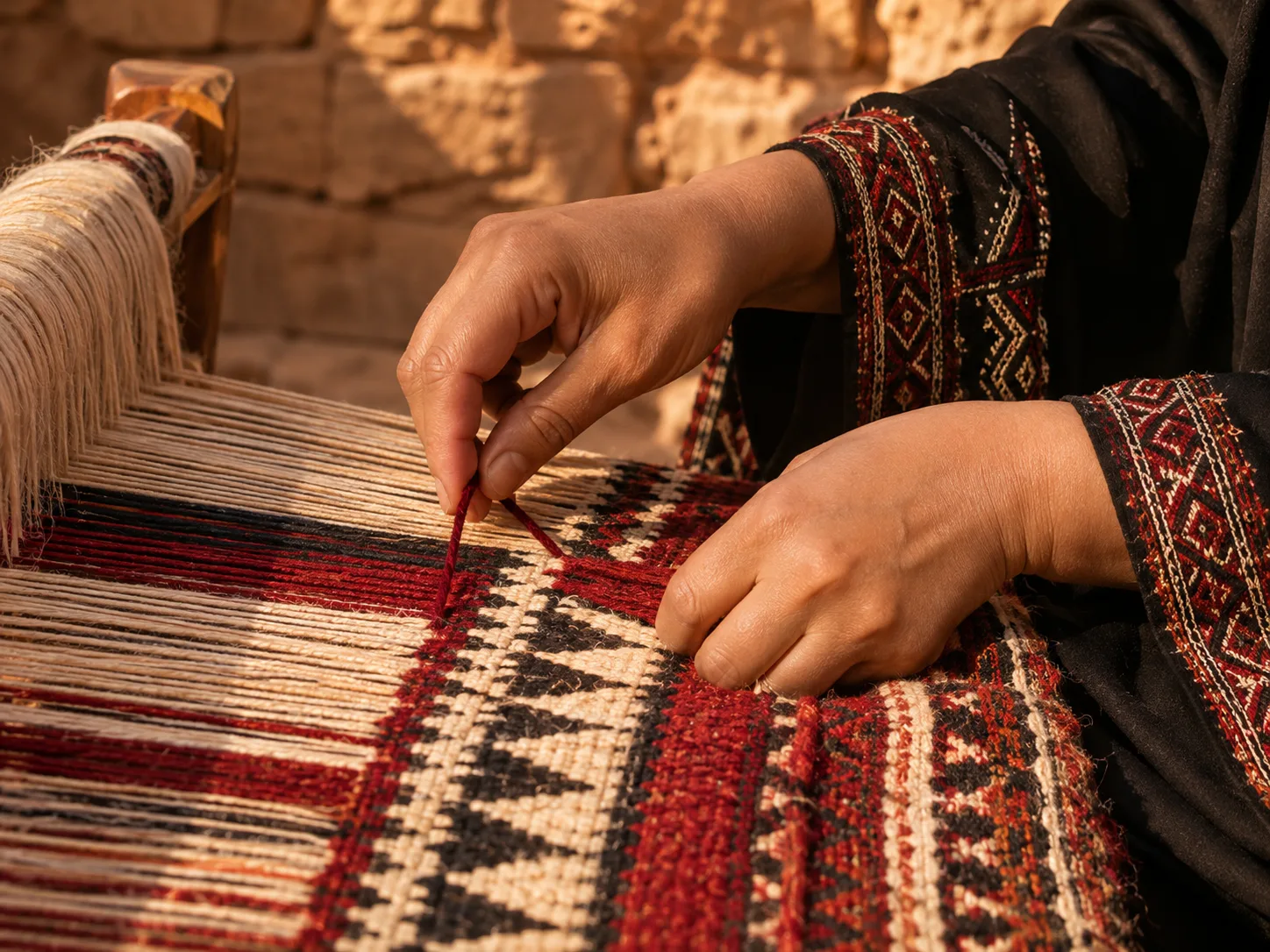
Our guides grew up in the valley, our food comes from three family farms nearby, and the textiles in the villas come from weavers in neighbouring villages, paid fairly for every piece.
By hand
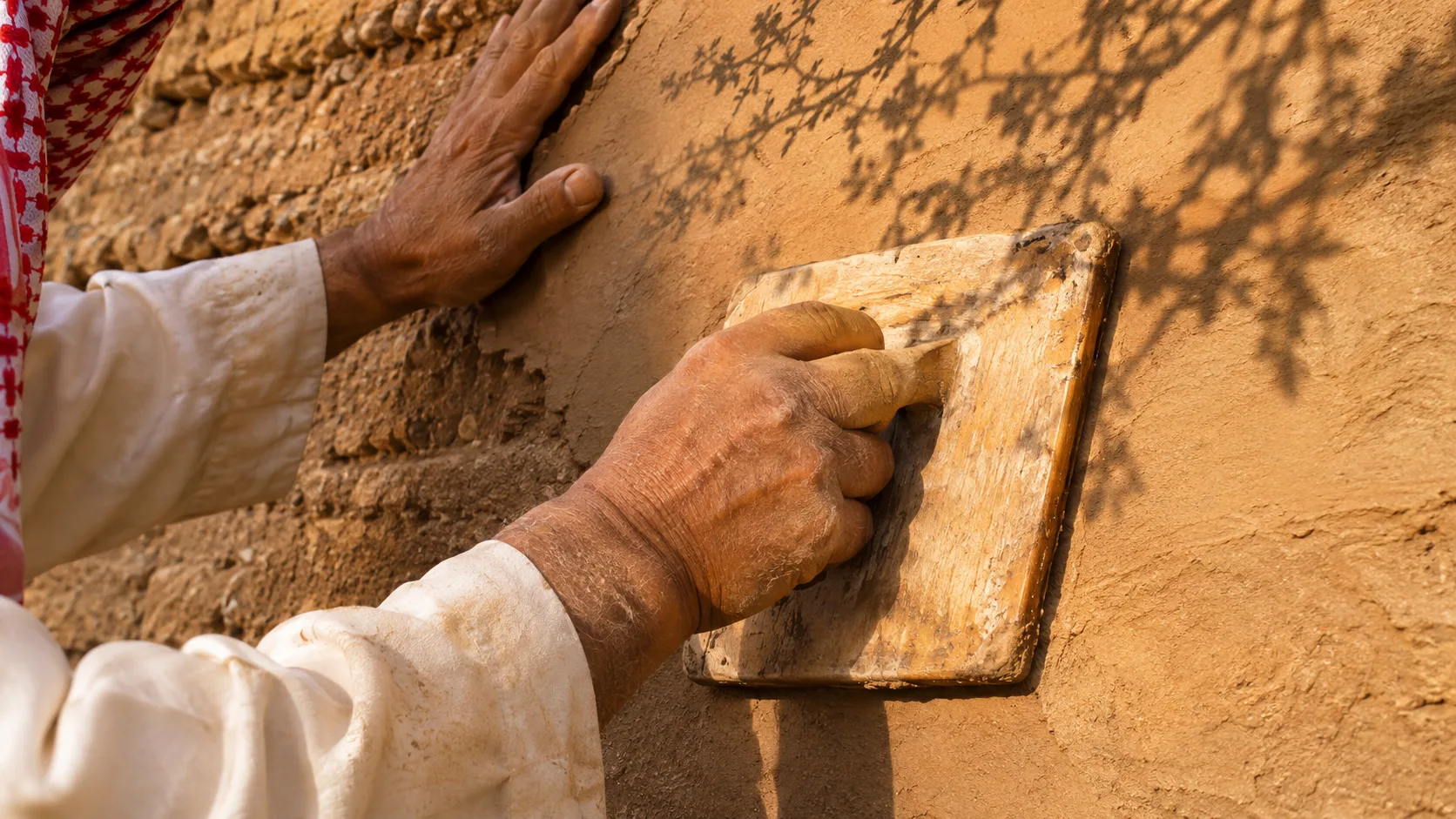
A wall that breathes, and is mended every winter.
The outer walls are re-plastered every winter with clay from the valley itself. The work is done by builders from nearby villages who learned the craft from their fathers, and who are happy to show guests how clay is mixed with straw and water.
“We did not build a hotel in the valley. We built a way of sitting in it.”
Saleh, our head guide- 7
- villas, never more
- 40km²
- of private canyon reserve
- 3
- family farms within 20 km
- 0
- floodlights in the reserve